Ethereum's Fusaka Upgrade: The Vision Unveiled: Why It Redefines Blockchain's Future
2|0 comments
Okay, friends, buckle up. Because what’s coming down the pike for Ethereum isn’t just another upgrade – it’s a potential paradigm shift. We’re talking about Fusaka, slated to launch December 3, 2025, and what it *really* represents: a critical leap toward a blockchain capable of handling a mind-boggling 100,000 transactions per second. Can you even imagine?
For years, we've heard the critics, right? “Ethereum is too slow,” they say. “Too expensive.” And, sure, they had a point. But what if those limitations are about to be shattered? What if, instead of a clunky, congested network, we’re on the cusp of a seamless, lightning-fast, truly *scalable* Ethereum? That’s what Fusaka is promising, and I, for one, am incredibly excited about it.
Fusaka's "PeerDAS" Engine: Redesigning the Data Highway
The Fusaka Leap: More Than Just Tweaks Now, let's get down to the brass tacks. Fusaka isn't just about slapping on a bigger engine; it’s about fundamentally redesigning the car. The core innovation here is PeerDAS (Peer Data Availability Sampling). Instead of every validator needing to download *everything* (think of it like trying to drink the entire ocean at once!), PeerDAS lets them sample bits and pieces. It’s like verifying a giant jigsaw puzzle without having to see every single piece. This drastically reduces bandwidth and storage requirements, paving the way for those massive throughput increases.Ethereum's Agile Evolution: Real-Time Capacity Adjustments
Key Technological Advancements And it doesn’t stop there. We’re talking about Blob Parameter Only (BPO) forks, which allow for smaller, more frequent capacity adjustments. No more waiting years for a massive upgrade; Ethereum can now adapt and scale in real-time. It's a move away from monolithic upgrades to a more agile system.Ethereum: Ushering in an Era of Biometric Blockchain Security
Enhanced Efficiency and Security But it's not just about speed and scalability. There are a lot of other changes, like improvements to gas and block sizing, all designed to make Ethereum more efficient and secure. There's even an update, EIP-7951, that adds native support for P-256 signatures, the same tech used by Apple's Secure Enclave and Android Keystore. What this means is that you will be able to use biometrics and passkeys instead of seed phrases, bringing layer 1 closer to mainstream fintech login flows!Architectural Innovation: Building the Foundation of the Future
Architectural Innovation and Decentralized Applications This isn’t just incremental improvement; it’s architectural innovation. It's about building a foundation for the future of decentralized applications.Fusaka: Unleashing Ethereum's True Potential for Everyone
The Promise of a Scalable Ethereum Now, I know what some of you are thinking: "Okay, Aris, that all sounds great, but what does it *mean* for me?" Well, imagine a world where decentralized finance (DeFi) is as seamless and affordable as traditional banking. A world where blockchain gaming is as smooth and immersive as the latest AAA titles. A world where social media is truly decentralized and censorship-resistant. That’s the promise of a scalable Ethereum, and Fusaka is a giant step in that direction.Blockchain's Promise: Power with Responsibility
Responsibility and Potential Risks But with great power comes great responsibility, as the saying goes. As we push the boundaries of what's possible with blockchain, we also need to be mindful of the potential risks. We need to ensure that these technologies are used for good, and that they are accessible to everyone, not just a select few.Blockchain's Double-Edged Sword: Democratization vs. Disinformation
Democratization of Information It’s like the printing press, right? A revolutionary technology that democratized information and knowledge. But it also enabled the spread of misinformation and propaganda. The same is true for blockchain. We need to be vigilant and ensure that these technologies are used to empower individuals and communities, not to exploit or control them.Fusaka: Building the Internet's Future, One Transaction at a Time
Community Reception and Future Foundation What I find truly amazing is how this upgrade is being received by the community. I saw one comment on Reddit that really stuck with me: "Fusaka isn't just about faster transactions; it's about building a more robust and resilient foundation for the future of the internet." That’s it in a nutshell.Ethereum's Foundation: A Call for Solidity's Renaissance
Concerns Regarding Core Development Tools Another key point that I often overlook is the fact that Ethereum developer Federico Carrone, better known as Fede’s Intern, cautions that many of the network’s core development tools, especially the Solidity programming language, are losing momentum. Solidity is responsible for more than 86% of the smart contract language used in the blockchain network’s over $200 billion DeFi protocols. This is a big issue because maintaining complex infrastructure depends on time, continuity, and deep expertise, which cannot be obtained overnight. What Is Ethereum Fusaka Upgrade? Why It Matters in 2025.Fusaka: A Declaration of Ethereum's Decentralized Future
A Glimpse of What's Possible I honestly believe we’re on the verge of something truly special. Fusaka isn’t just a technical upgrade; it’s a statement of intent. It’s a declaration that Ethereum is committed to scaling, to innovating, and to building a truly decentralized future. And I, for one, am incredibly excited to be a part of it.
-
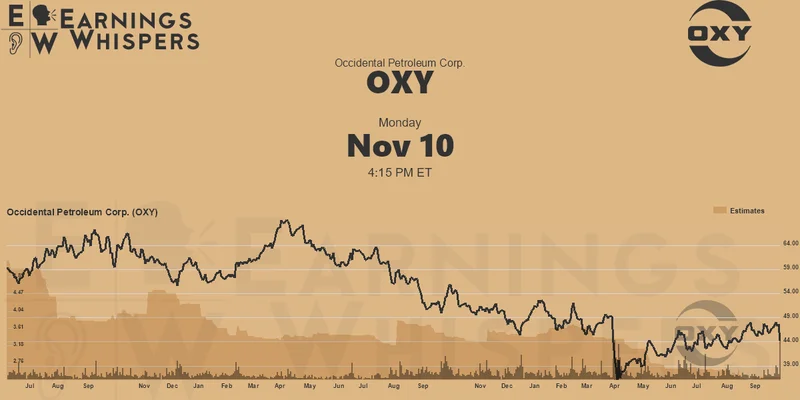
Warren Buffett's OXY Stock Play: The Latest Drama, Buffett's Angle, and Why You Shouldn't Believe the Hype
Solet'sgetthisstraight.Occide...
-
The Future of Auto Parts: How to Find Any Part Instantly and What Comes Next
Walkintoany`autoparts`store—a...
-

The Great Up-Leveling: What's Happening Now and How We Step Up
Haveyoueverfeltlikeyou'redri...
-

Applied Digital (APLD) Stock: Analyzing the Surge, Analyst Targets, and Its Real Valuation
AppliedDigital'sParabolicRise:...
-
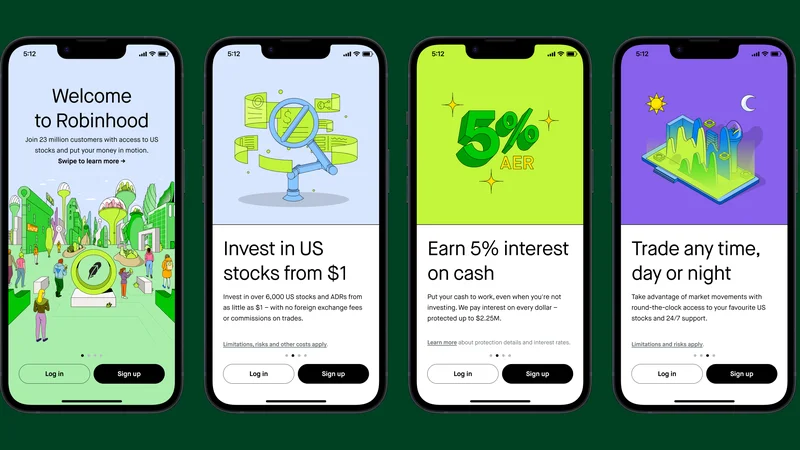
Analyzing Robinhood: What the New Gold Card Means for its 2025 Stock Price
Robinhood's$123BillionBet:IsT...
- Search
- Recently Published
-
- Ethereum: Outflows. Momentum. What Gives? - Crypto Twitter Reacts
- Altcoin Season: Three Drivers, One Big Caveat - Debate Ignites
- Ethereum's Fusaka Upgrade: The Vision Unveiled: Why It Redefines Blockchain's Future
- Why DeFi Performance Post-Crash is Still a Trap - Deep Dive
- Why This Altcoin "Rally" Is Just More Hype - Alt Season Incoming!
- Cathie Wood's Crypto Bet: Pure Delusion? - Reddit Hype Train
- Bitcoin's 'Safe Haven' Is Dead: 3 Big Problems. - Twitter Panics
- The Crypto Surging 35% Past Bitcoin: Which one is it, and why is this a pivotal moment?
- Larry Page's Ascent to Second Richest: Net Worth, Current Standing, and the Actual Figures
- Oracle Stock: Unlocking its True Potential and the Road Ahead
- Tag list
-
- Blockchain (11)
- Decentralization (5)
- Smart Contracts (4)
- Cryptocurrency (26)
- DeFi (5)
- Bitcoin (31)
- Trump (5)
- Ethereum (8)
- Pudgy Penguins (6)
- NFT (5)
- Solana (5)
- cryptocurrency (6)
- bitcoin (7)
- Plasma (5)
- Zcash (12)
- Aster (10)
- nbis stock (5)
- iren stock (5)
- crypto (7)
- ZKsync (5)
- irs stimulus checks 2025 (6)
- pi (6)
- hims stock (4)
- kimberly clark (5)
- uae (5)